Customer Relationship Management (CRM)
- Data, Strategy, Systems
Customer Relationship Management involves strategies and practices to manage customer interactions and data, the term however is generally used to refer to the technology that supports this - CRM tools. These tools are essential to businesses with a high volume of customers, offering benefits to all areas of the business; Sales, Customer Service, IT, Operations and Marketing.
Data Management:
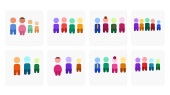
CRM tools unify customer and company data from multiple sources, acting as a central repository for all relevant data. This includes basic customer details such as name and contact information,
as well as purchasing history and interaction logs. This provides Sales & Customer Service teams with consistent information and comprehensive customer profiles, allowing consistent customer
communication and improved service, as well as providing a single source of truth across the business which aids Collaboration
and strategic discussions. This all works to improve
sales, Customer Lifetime Value and profitability.
Pipeline Management:
In addition to improving the handling of existing customers, CRM tools offer huge benefits for Pipeline Management.
Leads at all levels of the Marketing Funnel can be added to the system, with potential value added to prioritise them and contact schedules set to ensure all steps are taken to
increase their conversion. Pipeline data can be extracted and fed into automated reports to show Pipeline value, which drives Sales activity and helps in the formulation of Sales strategies.
Workflow Automation:
When implemented correctly CRM tools can be the backbone of organisational processes via their Automation capabilities. They provide
activity tracking and ticketing functionality to ensure all outstanding actions are properly recorded and scheduled, with overdue tasks flagged and visible to all relevant parties. They can also
be used to automate repetitive tasks such as sending emails and assigning work to account owners. This greatly improves not only customer facing performance but also organisational efficiency,
providing increased revenue with lowering servicing costs.
Customer Analytics:
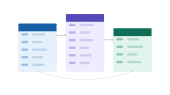
The data collected by and held in CRM systems provides the primary source for all customer analytics. This data can be automatically connected to central organisational
Databases which can then feed into automated reports and
Business Intelligence tools, providing easily updatable and tailor made dashboards showing key business information. The
data can also be used to feed Customer Profiling and
Machine Learning processes, providing advanced views on customer behaviour and organisational performance and predictive
analytics for forecasts on Pipeline conversion, business growth and cashflow management. For any business wishing to improve its analytical capabilities CRM Tools are the most important tool
available.
Many organisations employ CRM Tools with extensive capabilities but are unable to realise their full value, often using only the most basic customer handling functionality. Kontekx have experience working with CRM Tools across industries, with particular expertise in fully realising the value of their data, and in using their functionality to improve organsiational processes and Collaboration.