Machine Learning
- Data, Strategy, Systems
Machine Learning is a field within Artificial Intelligence which uses algorithms to analyse datasets to recognise and define patterns. The possibilities with this are extensive and provide many useful applications for businesses, such as predicting customer behaviour and segmenting customers into target groups. While the workings of these processes are complex, there are numerous tools which facilitate their application (many of which are open source/free) and their results are easy to understand. As such they can provide value to wide range of businesses.
The word algorithm has become something of a buzzword in recent years, seemingly used as a blanket term to describe any advanced computing technology, yet to many people its meaning is unclear.
In the most simple terms an algorithm is a set sequence of steps and operations, which is designed to achieve an objective. These steps can include complex mathematical computations and they
can be combined and completed rapidly and in large volumes, to provide results not otherwise possible. There are many types of algorithm, which work through problems in different ways. They
can be broadly categorised into three types:
Supervised Learning:
Used to determine the relationship between known inputs & outputs - i.e. define how variables drive an outcome. The primary use of this is to forecast outcomes; how much will a market grow,
how will prices change, what is the probability of a lead converting to a customer based on its known characteristics etc. This can also be used in scenario and what-if planning to understand
market & customer responses to changing conditions. These algorithms work with labelled data to determine the relationships present.
Unsupervised Learning:
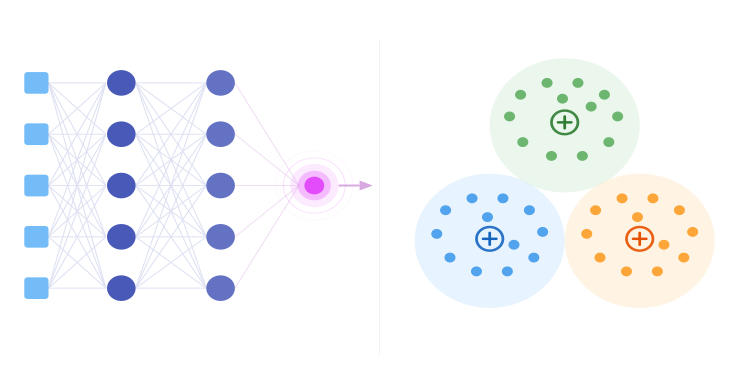
These algorithms work autonomously - analysing unstructured and unlabelled (no clear definition of input-output) data to find hidden patterns. A primary use of this is 'clustering' which
identifies groups based on common features and. This can be extremely valuable for organisations by allowing leads & customers to be accurately segmented, allowing for focussed marketing
and customer service.
Reinforcement Learning:
This uses trial and error to learn optimal decisions, interacting with the environment (through data) and receiving feedback. These algorithms can be used optimise operations and personalise
marketing through refining recommendations. Their use has increased in recent years with advances in technology improving their value to businesses
There are numerous individual algorithms within each of these groups, with specific features relevant to particular requirements. With an understanding of their uses they can be applied using open-source (free) tools to provide immediate value. Any business with relevant data can benefit from a review of their potential impact, and this is something Kontekx can provide as part of an initial consultation.